Why Does My House Smell Musty?
A musty smell usually means something in or under your house is staying damp. Here's how to track it down and get rid of it for good.
A musty smell usually means something in or under your house is staying damp, and mold or mildew is growing on it. The smell comes from gases they release as they grow. Candles, sprays and cleaning can cover it for a while, but it comes back until the moisture is gone.
The usual places to look are the crawl space or basement, a slow plumbing leak, the air conditioning system, and anything soft that got wet and never fully dried, like carpet or insulation.
If what you smell is closer to rotten eggs or gas, that's a different problem. Leave the house and call your gas company or 911 from outside.
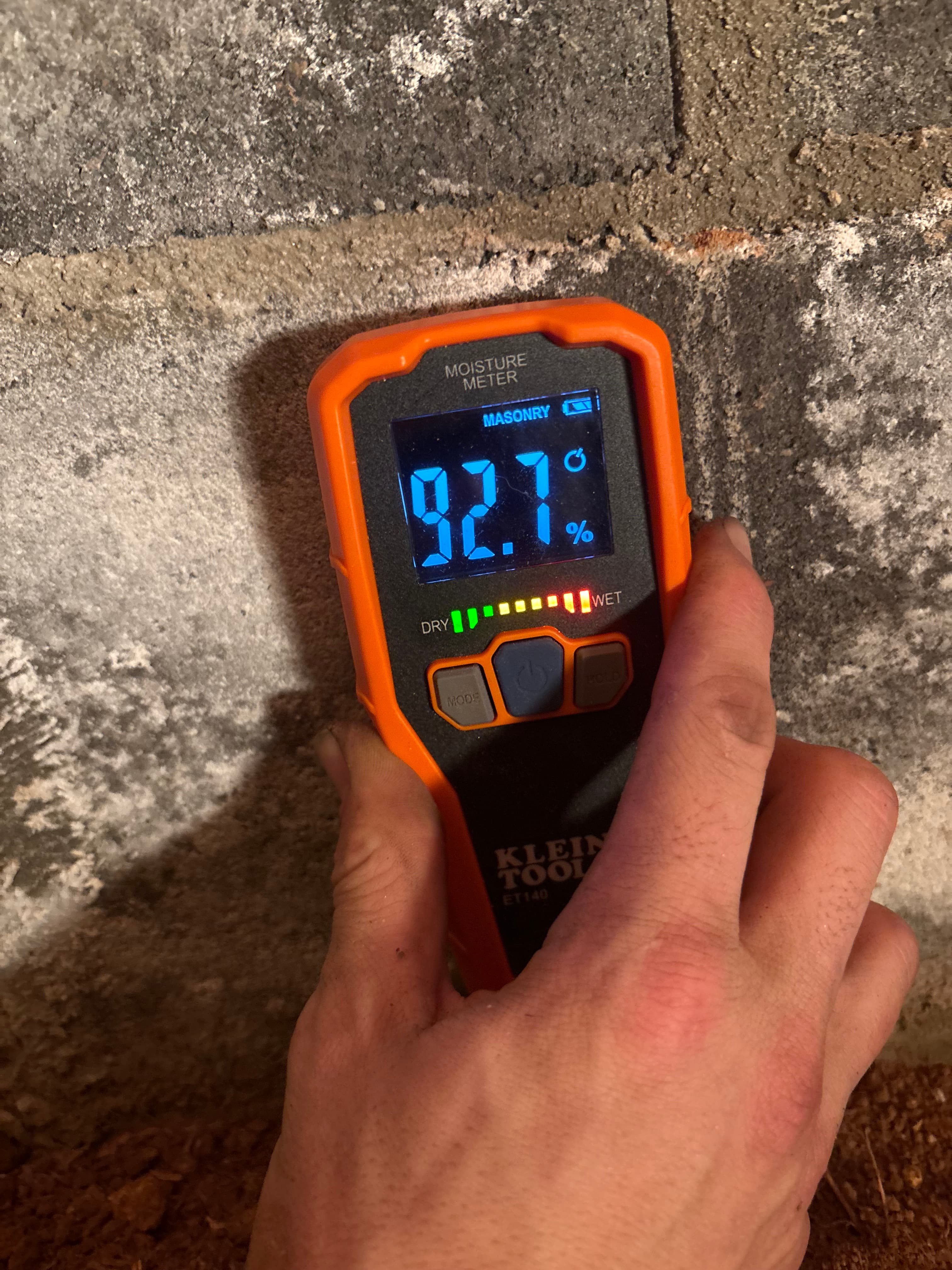
Where a musty smell usually comes from
| Source | What you might notice | Where to check |
|---|---|---|
| Crawl space or basement | Strongest on the lowest floor, worse in summer or after rain | Bare or wet soil, fallen insulation, damp walls |
| Plumbing leak | Stays in one area, may have started suddenly | Under sinks, behind toilets, around the water heater |
| Air conditioning system | Stronger when the AC kicks on | Drain pan, drain line, filter, ductwork |
| Roof or window leak | Shows up after storms | Ceiling stains, window sills, attic insulation |
| Carpet, closets and storage | One room or closet | Carpet padding, exterior walls, boxes on the floor |
| Laundry area | Near the washer or dryer | Washer gasket, supply hoses, dryer vent |
What the timing tells you
Why does my house smell musty when it rains?
Water is probably getting in, or an area that's already damp is getting wetter. Start outside: look for clogged gutters, downspouts dumping at the foundation, and ground that slopes toward the house. Then check the crawl space or basement, window sills and ceilings.
Why does my house smell musty in the summer?
Summer air here is hot and humid. In a vented crawl space, that air can reach surfaces cooled by the air conditioning, such as ductwork and the underside of the floor, and leave them damp. Inside the house, an AC that isn't removing enough humidity can have a similar effect.
Why does my house smell musty all of a sudden?
A smell that shows up suddenly often points to something new, like a plumbing leak, a recent storm or an appliance problem. Check under sinks, around the water heater, behind the washer and on the ceilings below any bathrooms.
Why does my house smell musty when I come home or get back from vacation?
Your nose gets used to a smell when you live with it, so you notice it most when you walk back in. A closed-up house can also get more humid, especially if the AC was set higher while you were gone. If the smell clears after the house has been open and cooled for a while, watch the humidity. If it doesn't, keep looking for a source.
Can a house smell musty without mold?
Yes. Damp materials and stale air can smell musty even when you can't find any mold. But no visible mold doesn't rule it out. The EPA notes that if a building smells moldy and you can't see the source, the mold may be hidden, including behind walls, above ceilings or under carpet.
Is a musty smell in the house dangerous?
The smell itself doesn't tell you how much mold is present or whether it will affect you. According to the CDC, mold exposure may cause a variety of health effects, or none at all. It can cause a stuffy nose, sore throat, coughing or wheezing, burning eyes or a skin rash. People with asthma or mold allergies may have more severe reactions, and people with weakened immune systems or chronic lung disease are at higher risk of lung infections.
We're contractors, not doctors. If anyone in the home has symptoms, or you're concerned about a health condition, talk to a health professional. Do that before you start any cleanup, too.
How to find the source of a musty smell
- Find where it's strongest. Walk the house after it's been closed up for a few hours, and start at the lowest floor.
- Check the humidity. An inexpensive hygrometer will give you a reading in each area. The EPA recommends keeping indoor humidity below 60 percent, and ideally between 30 and 50 percent.
- Open what's closed. Look under sinks and behind toilets, and inside closets on outside walls. Feel the carpet along the walls and in the corners.
- Check the AC. Replace a dirty filter, and look for standing water around the indoor unit. If the smell starts when the system kicks on, have an HVAC technician check it.
- Check the attic. Look for stained roof decking, and for insulation that's wet or matted down.
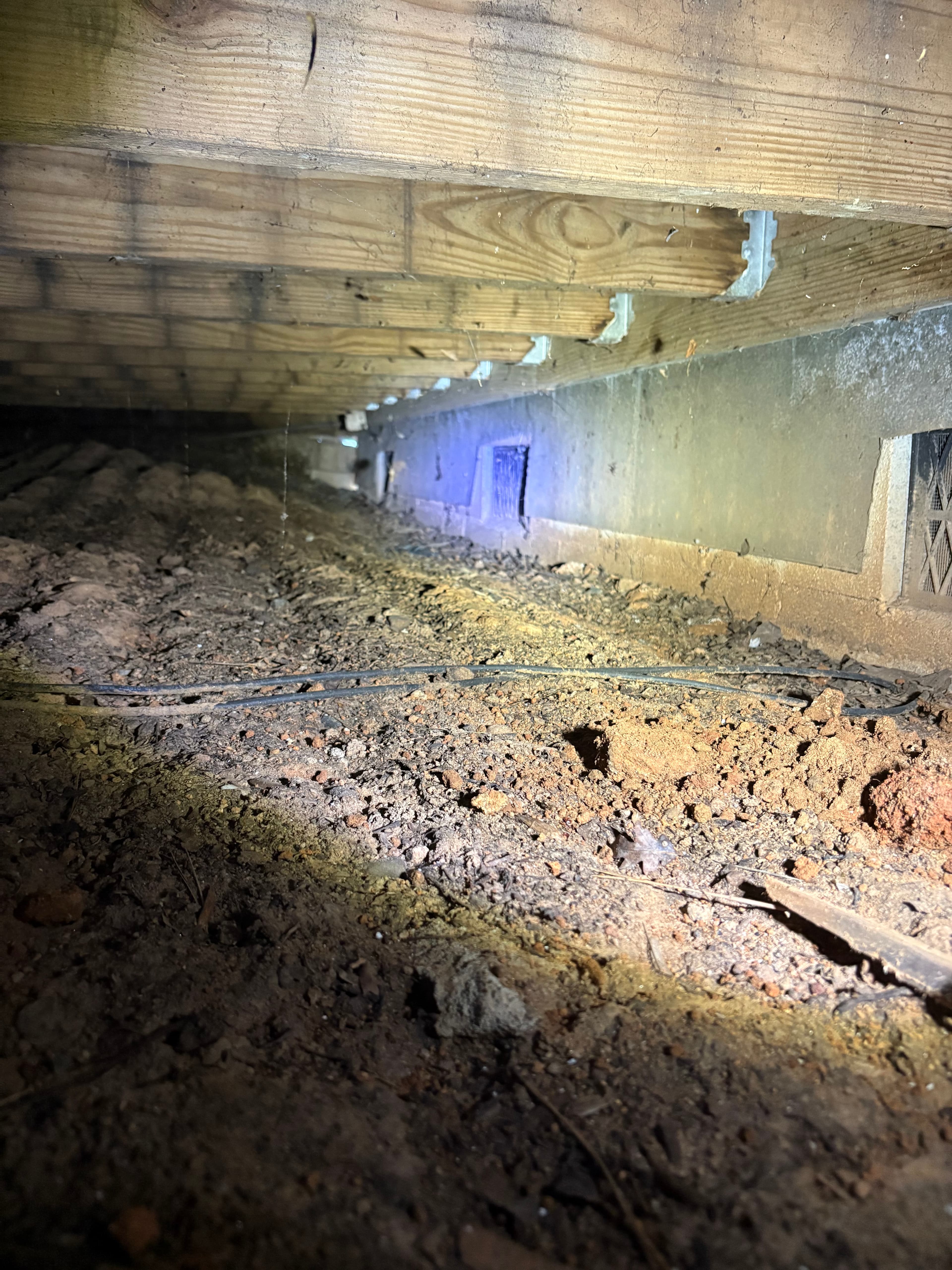
- Look in the crawl space from the access door. Use a flashlight. You're looking for bare soil, torn plastic, fallen insulation, water or visible growth. If you see standing water, stay out and read what to do about standing water in a crawl space.
How to get rid of a musty smell for good
- Stop the moisture first. The EPA is clear that mold comes back if you clean it up without fixing the water problem.
- Dry whatever got wet. The EPA says to dry water-damaged areas and items within 24 to 48 hours to prevent mold growth.
- Clean or remove what's affected. The EPA says most people can handle a moldy area smaller than about 10 square feet themselves. Larger areas, or damage from sewage or contaminated water, should go to a professional. Soft materials that got moldy, like ceiling tile and carpet, may need to be thrown away.
- Keep the humidity down. Use the bath fan and kitchen exhaust, and run a dehumidifier in damp areas if you need one.
Air fresheners, candles and air purifiers don't fix the cause, because the source keeps producing the smell.
Why the crawl space is so often behind it
Air in a house tends to move upward. As warm air rises and leaves through the upper part of the house, air gets pulled in down low, and in a crawl space home some of it comes up through gaps in the floor. If the crawl space is damp, you can smell it upstairs.
Around Charlotte, the common setup is a vented crawl space over a dirt floor. The soil gives off moisture, and the vents let in humid outdoor air for much of the year. Over time, that can leave the insulation between the joists wet enough to sag and fall, and it can leave wood damp enough for mold to grow.
The fix depends on what's causing the moisture:
- Water coming in: deal with that first, starting with gutters and grading. Drainage may be needed.
- Moisture from the ground: a vapor barrier covers the soil.
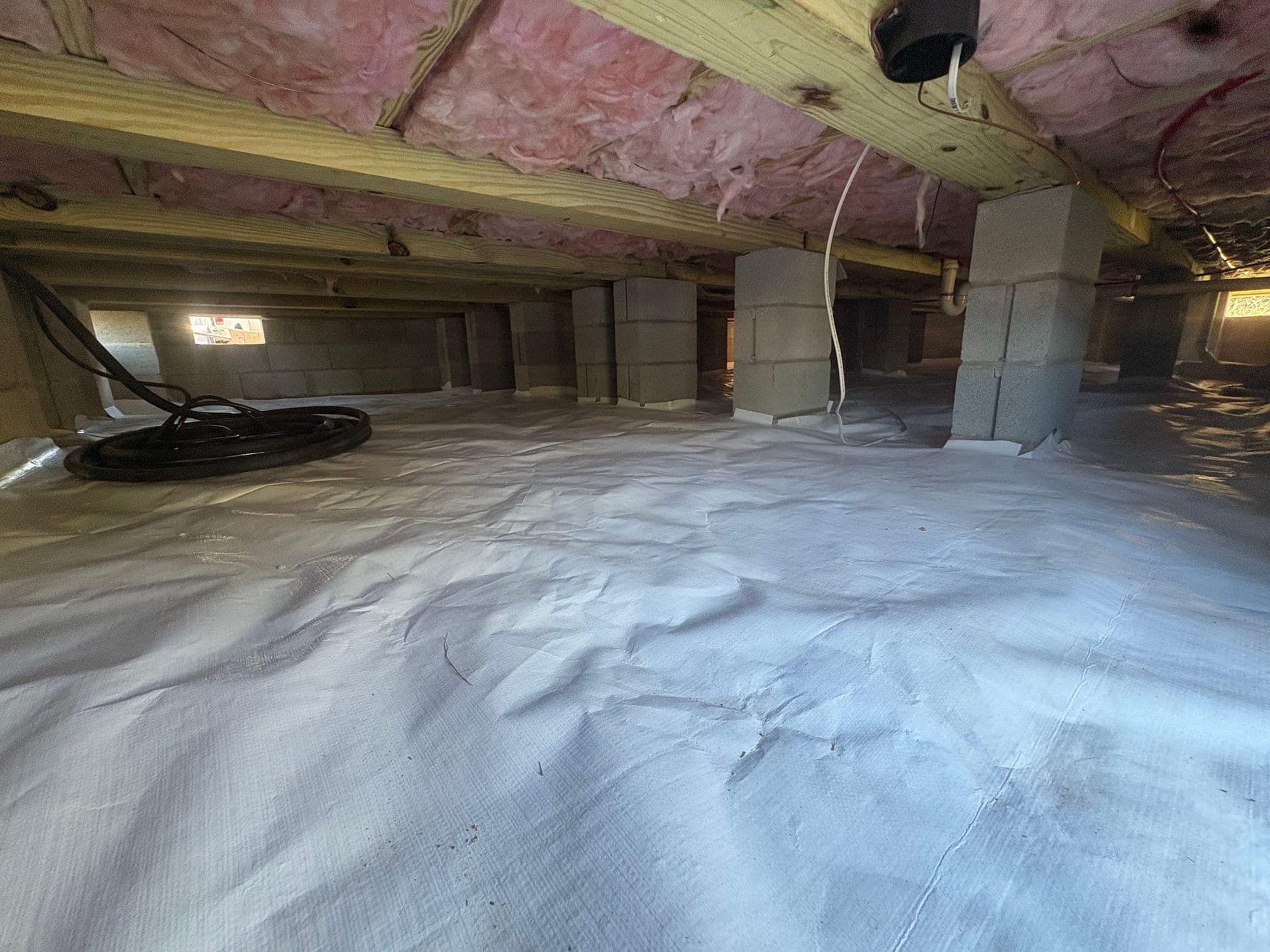
- Humid air getting in: encapsulation lines the floor and walls, closes off the vents and controls humidity with a dehumidifier or another drying method.
Closing up a crawl space is a building change, not just a liner. In North Carolina, the State Fire Marshal's office says a permit is required to convert a conventional crawl space to a closed one, whatever the cost, and the state code requires a way to mechanically dry the space. Ask anyone quoting the work how they'll handle both.
For typical prices, see what crawl space encapsulation costs.
When to call someone
- The smell keeps coming back after you've cleaned and dried what you can find
- You can see mold covering more than about 10 square feet
- There's water, wet insulation or visible growth in the crawl space
- Your floors feel soft, or the wood under them looks damaged
- You can't find the source
Sources
- A Brief Guide to Mold, Moisture and Your Home, U.S. Environmental Protection Agency
- About Mold and Your Health, Centers for Disease Control and Prevention
- Permit Required for Closed Crawl Space, N.C. Office of State Fire Marshal
Photos from crawl spaces we've worked in
Questions we get asked
Can a house smell musty without mold?
Yes. Damp fabric, wet insulation, old carpet and a house that has been closed up can all smell musty before there's mold you can see. Mold can also be hidden behind a wall, under a floor or inside ductwork. Either way, the smell tells you to look for moisture.
Is it safe to sleep in a room that smells musty?
Many people have no symptoms, but mold can affect people differently. People with asthma, mold allergies, chronic lung disease or a weakened immune system should be more careful and ask a doctor. If anyone has symptoms that improve when they leave the room, sleep elsewhere until you've found the source.
Why does my house smell musty when it rains?
Rain usually means water is getting in somewhere, or that a damp area is getting wetter. Check for wet spots in the crawl space or basement, downspouts dumping at the foundation, and stains around windows and on ceilings.
Will a musty smell go away on its own?
It may fade when the weather turns dry or the windows are open, but it usually comes back while the source stays damp. It goes away for good once the moisture problem is fixed and the affected material is dried, cleaned or replaced.
Should I have my house tested for mold?
Usually not as a first step. The CDC doesn't recommend routine mold testing, and the EPA says sampling is unnecessary when you can see mold growing. Finding and fixing the moisture matters more. If you have health concerns, talk to a health professional.
Do air purifiers get rid of a musty smell?
They can reduce some odor in the room they're running in, but they don't stop the source. As long as something stays damp, the smell keeps coming back.
Related pages
Want to know what’s going on under your house?
We’ll come out, get under there, take photos, and tell you straight what we find, whether that turns into a job for us or not. The inspection is free.
Call (336) 995-0521Ready to lower your bills and breathe easier?
Get a free, no-pressure home inspection. We'll show you exactly what's happening beneath and above your living space — and what it's costing you.