Standing Water in Your Crawl Space: What to Do
Standing water in a crawl space isn't normal and shouldn't be left there. Here's what to do first, how to work out where it's coming from, and who to call.
If you find standing water in your crawl space, stay out of it until you know the electrical is safe and the water isn't sewage. Then find the source, get the water out and dry the space. It isn't normal, and it won't stay harmless if you leave it. Wet crawl spaces can lead to mold, rot, rusted metal and ruined insulation.
What to do first
- Don't go in yet. Water and crawl space wiring are a shock hazard. If water is near wiring, outlets or equipment, don't touch any of it. Don't step into water to reach a breaker. If you can't safely reach the panel from a dry spot, call an electrician.
- Check for sewage. A sewer smell, toilet paper or water that rises when you flush or run the washer points to a drain or sewer line. Stay out, stop using the drains and call a plumber. The EPA recommends a professional with contaminated-water experience for sewage damage.
- Check for a plumbing leak. Turn off everything that uses water, including the ice maker and any irrigation, and note the reading on your water meter. Check it again in an hour. If it moved, you may have a supply line leak, so call a plumber. This test won't catch a leaking drain, so also check under the house after running a shower or washer, from the access door.
- Look outside. Check for clogged gutters, downspouts dumping against the foundation and ground that slopes toward the house. Extending a downspout is cheap and can help right away.
- Take photos from the access door. Note how deep the water looks, the date and whether it rained. This helps whoever diagnoses it, and your insurance company if you file a claim.
- Call the right person. See who to call below.
If the water has reached a furnace, water heater or other gas appliance, don't use it until a qualified technician has checked it.
Is standing water in a crawl space normal?
No. It's common, especially on heavy clay soil like much of what we have around Charlotte, but it isn't something to live with. Clay drains slowly, so water that collects under a house can sit there for a long time.
If it happens once after an extreme storm and dries quickly, the fix may be as simple as a gutter or downspout repair. If it keeps coming back, you've got a drainage problem to solve.
Where the water is coming from
| What you notice | Likely source | Usual fix |
|---|---|---|
| Water after heavy rain, mostly along one wall | Gutters, downspouts or ground sloping toward the house | Repair gutters, extend downspouts, correct the grade |
| Water coming up through the floor or along all the walls after long wet spells | Groundwater | Interior drain and sump, sometimes exterior drainage |
| Water in dry weather | Supply line or drain leak | Plumbing repair |
| Sewer smell or debris | Drain or sewer line | Plumber, then professional cleanup |
| Wet near the indoor AC unit or ductwork | AC condensate line or duct condensation | HVAC repair and humidity control |
Standing water in a crawl space after heavy rain
Water that shows up after a storm usually points to surface water or groundwater. Start with what's cheapest to rule out. Water from a single downspout can be a lot during a storm, and if the ground slopes toward the house, it can end up under it.
If the gutters and grading are fine and water still shows up, groundwater may be rising into the space. That usually needs a drainage system.
Who to call for water in a crawl space
| Situation | Who to call |
|---|---|
| Water near wiring or electrical equipment | Licensed electrician |
| Water in dry weather, or a suspected leak or sewage | Licensed plumber |
| A lot of water at once, such as a burst pipe or flood | Water damage restoration company |
| Water that keeps showing up after rain | Crawl space or drainage contractor |
| Wet near the AC or ductwork | HVAC technician |
Will a crawl space dry out on its own?
Sometimes the visible water soaks in or evaporates, but that doesn't mean the problem's over. The soil can stay wet, and the air under the house can stay humid. The EPA advises drying water-damaged materials within 24 to 48 hours to prevent mold growth, which is hard to do in a crawl space without help.
How to get water out of a crawl space
Once the electrical is safe and you know the water isn't sewage:
- Stop the source if you can.
- Pump it out. Use a utility or submersible pump for deep water, and a wet/dry vacuum for what's left. Plug electric equipment into a GFCI-protected outlet, and don't stand in water while using it.
- Take out what's ruined. Wet insulation, soaked plastic and debris usually need to come out so the space can dry.
- Dry the space. Use fans or a dehumidifier sized for the job, and check the wood with a moisture meter before anything gets covered.
If that sounds like more than you want to do in a tight space, it's reasonable to hire it out. Crawl spaces can hide other hazards, including sharp debris, pests and mold.
Don't lay plastic over the water. A vapor barrier isn't a fix for standing water. Water trapped under it has nowhere to go.
What standing water can damage
- Wood framing: joists, beams and subfloor can rot if they stay damp, which can lead to sagging floors.
- Insulation: wet batts get heavy and can fall out of the joist bays.
- Metal and ductwork: straps, fasteners and ducts can rust or fail.
- Air quality: damp crawl spaces can grow mold, and that can lead to a musty smell in the house.
- Pests: moisture can attract insects and other pests.
- Foundation: soil that stays saturated around the footings can contribute to movement. Watch for new cracks, sloping floors and doors that start to stick.
How it gets fixed for good
The order matters. Water comes first, and sealing comes last.
- Fix the outside. Gutters, downspouts and grading come first, since they're often the cheapest fix.
- Repair any leaks. Plumbing and AC condensate problems should be repaired before anything else goes in.
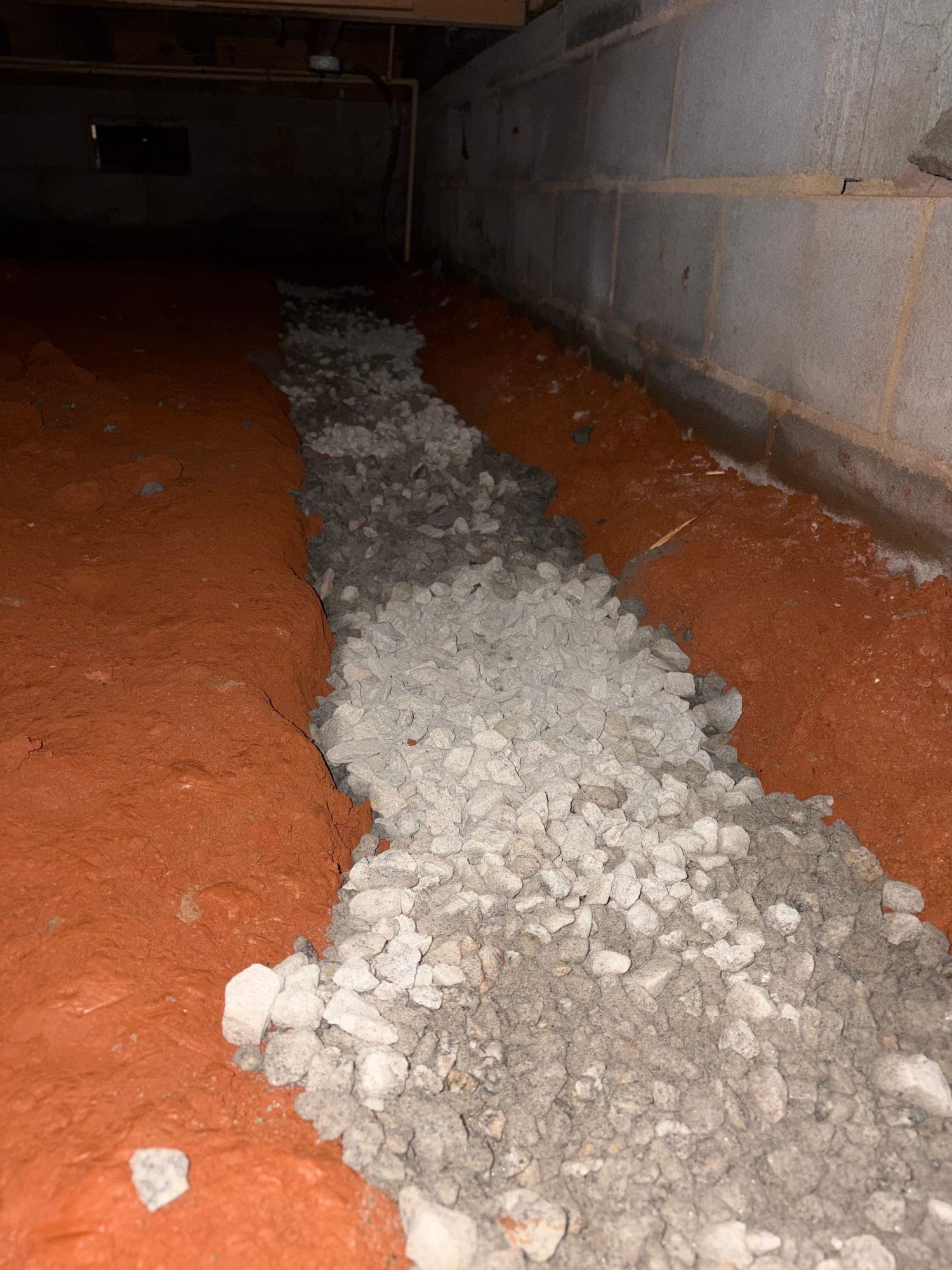
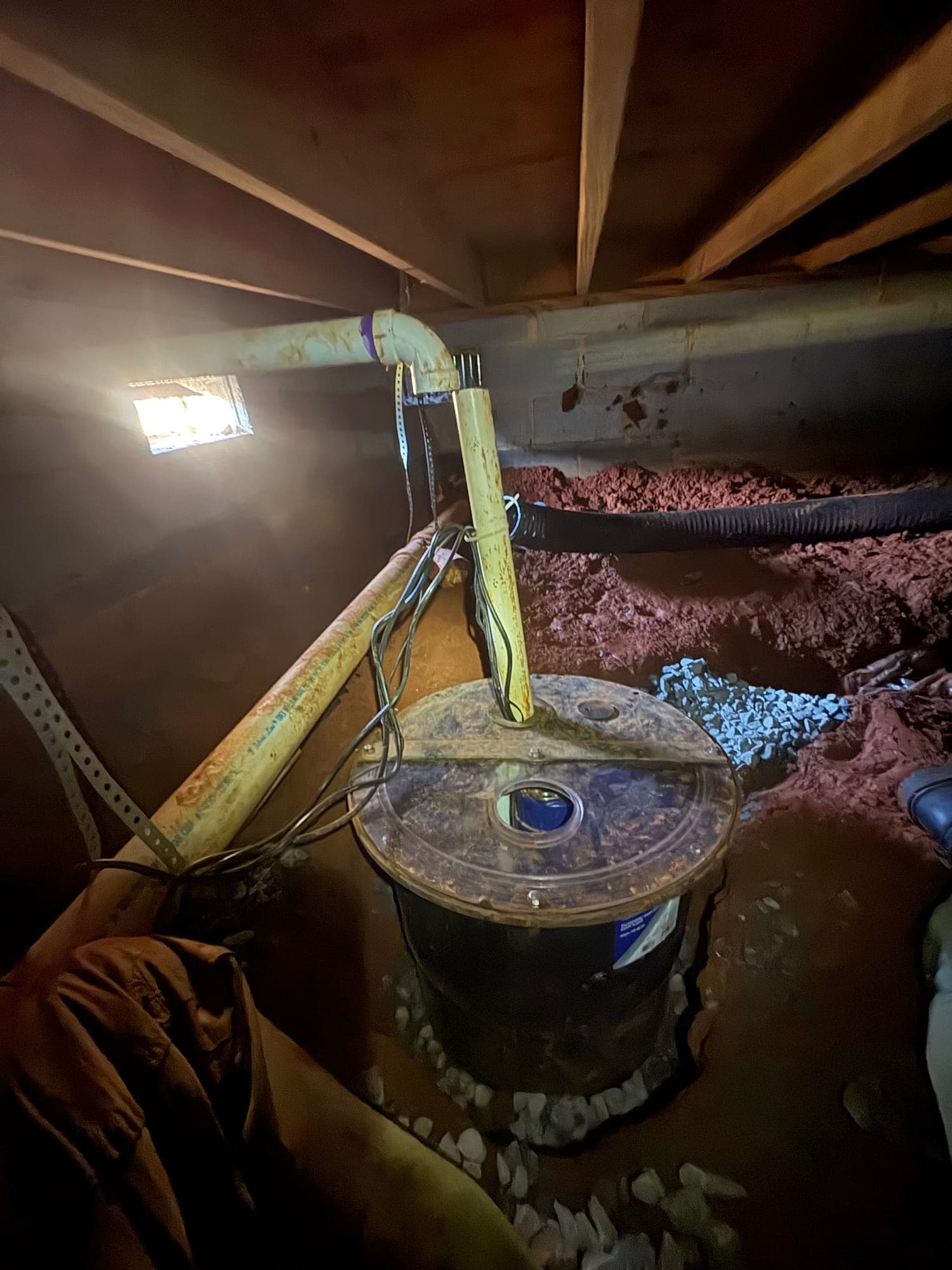
- Add drainage if water still gets in. A typical system is a gravel-filled perimeter drain that carries water to a sump pump, which pushes it outside. Some lots can drain by gravity instead.
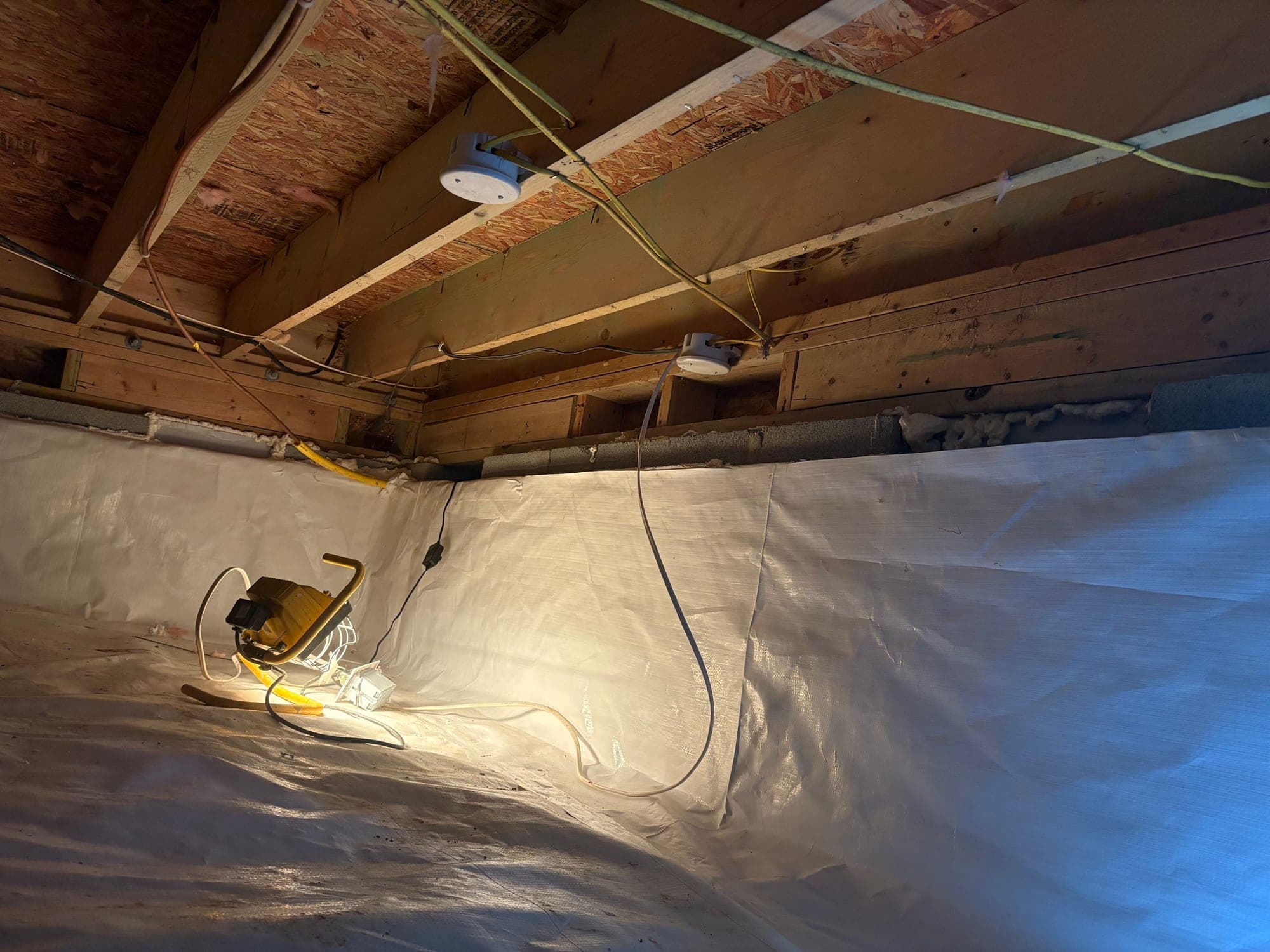
- Control the moisture. A vapor barrier or full encapsulation keeps ground moisture and humid air out. In North Carolina, the State Fire Marshal's office says converting to a closed crawl space requires a permit, whatever the cost, and the state code requires a way to mechanically dry the space.
- Repair the damage. Replace ruined insulation, and repair any framing that has been damaged.
For price ranges, see what crawl space encapsulation costs. Our cost estimator can also give you a starting point.
Sources
- A Brief Guide to Mold, Moisture and Your Home, U.S. Environmental Protection Agency
- Permit Required for Closed Crawl Space, N.C. Office of State Fire Marshal
Photos from crawl spaces we've worked in
Questions we get asked
Is standing water in a crawl space normal?
No. A crawl space may get damp in a very wet stretch, but pooled water means it's coming in faster than it can drain away. Even if it disappears between storms, it's worth finding out why it's there.
Who do I call for water in my crawl space?
Call a plumber if water is there in dry weather or you suspect a leak or sewage. Call an electrician if water is near wiring or equipment. Call a crawl space or drainage contractor if it shows up after rain. Call a water damage restoration company if a large amount got in all at once.
Will a crawl space dry out on its own?
A small amount of water may soak in or evaporate, but the space can stay humid for a long time, and the next heavy rain can bring it right back. The EPA says wet materials should be dried within 24 to 48 hours to prevent mold growth.
Can standing water in a crawl space damage the foundation?
It can contribute to problems, especially if soil around the footings stays saturated or the water keeps coming back. Wet conditions also put wood framing at risk of rot. Cracks, sloping floors or doors that start sticking are reasons to have the structure looked at.
How much does it cost to fix standing water in a crawl space?
It depends on the source. A downspout extension costs a few dollars, while a plumbing repair or an interior drain and sump is a much bigger job. Projects that combine encapsulation and drainage can run $10,000 or more. You need to know the source before a quote means much.
Does homeowners insurance cover water in a crawl space?
It often depends on the cause and your policy. A sudden burst pipe may be treated differently from groundwater or slow seepage, and flood damage usually requires separate flood coverage. Take photos and call your insurance company before you start permanent repairs.
Related pages
Want to know what’s going on under your house?
We’ll come out, get under there, take photos, and tell you straight what we find, whether that turns into a job for us or not. The inspection is free.
Call (336) 995-0521Ready to lower your bills and breathe easier?
Get a free, no-pressure home inspection. We'll show you exactly what's happening beneath and above your living space — and what it's costing you.